Blue Vervain Seeds
Vervain is one of those super-historic wildflowers that are common over most of the world. Vervain appears in Roman history, as a plant used to soak in fuel and then use as a torch.
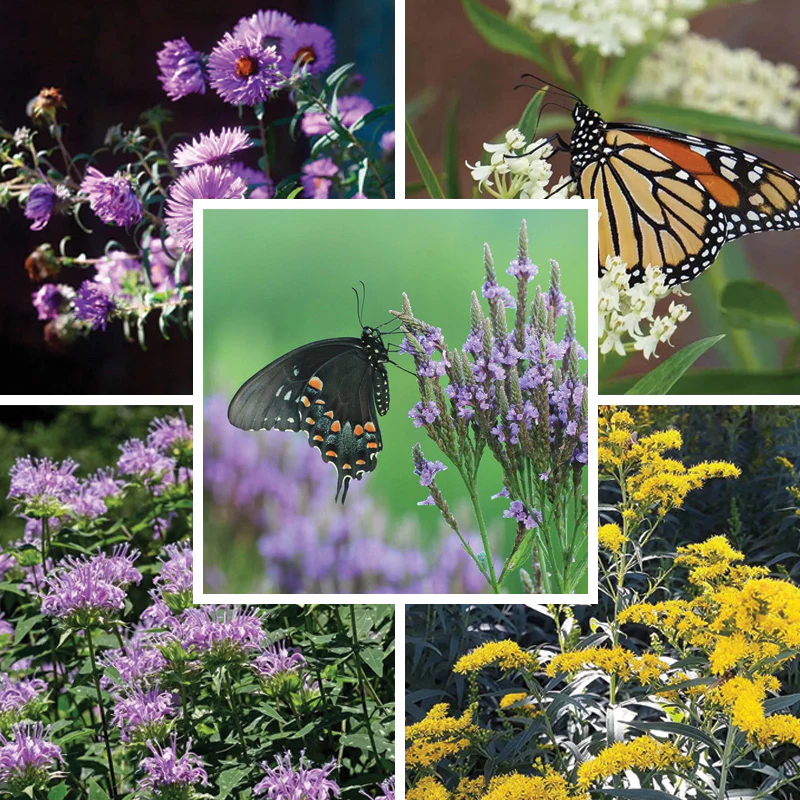
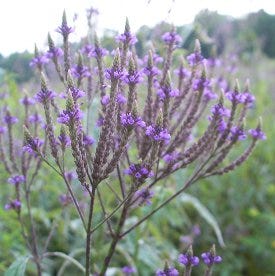
It's a wild verbena (which you can tell by the botanical name), and you'll find it in meadows and along roadsides in the entire US and Canada. The plants grow up to 5 or 6 feet, and are topped by stunning blue flowers in pointed spikes. They look much like garden salvia or veronica. The flower stems are arranged like a candelabra at the end of each stalk.
This is a good, non-invasive plant for your wild garden--just add it near the back of your wildflowers, or spot a few throughout a meadow. The blooms open in midsummer through fall. And by the way, they're beautiful standing tall in big wildlfower arrangements.
Vervain is one of those super-historic wildflowers that are common over most of the world. Vervain appears in Roman history, as a plant used to soak in fuel and then use as a torch.
It's a wild verbena (which you can tell by the botanical name), and you'll find it in meadows and along roadsides in the entire US and Canada. The plants grow up to 5 or 6 feet, and are topped by stunning blue flowers in pointed spikes. They look much like garden salvia or veronica. The flower stems are arranged like a candelabra at the end of each stalk.
This is a good, non-invasive plant for your wild garden--just add it near the back of your wildflowers, or spot a few throughout a meadow. The blooms open in midsummer through fall. And by the way, they're beautiful standing tall in big wildlfower arrangements.
Original: $4.70
-70%$4.70
$1.41Description
Vervain is one of those super-historic wildflowers that are common over most of the world. Vervain appears in Roman history, as a plant used to soak in fuel and then use as a torch.
It's a wild verbena (which you can tell by the botanical name), and you'll find it in meadows and along roadsides in the entire US and Canada. The plants grow up to 5 or 6 feet, and are topped by stunning blue flowers in pointed spikes. They look much like garden salvia or veronica. The flower stems are arranged like a candelabra at the end of each stalk.
This is a good, non-invasive plant for your wild garden--just add it near the back of your wildflowers, or spot a few throughout a meadow. The blooms open in midsummer through fall. And by the way, they're beautiful standing tall in big wildlfower arrangements.