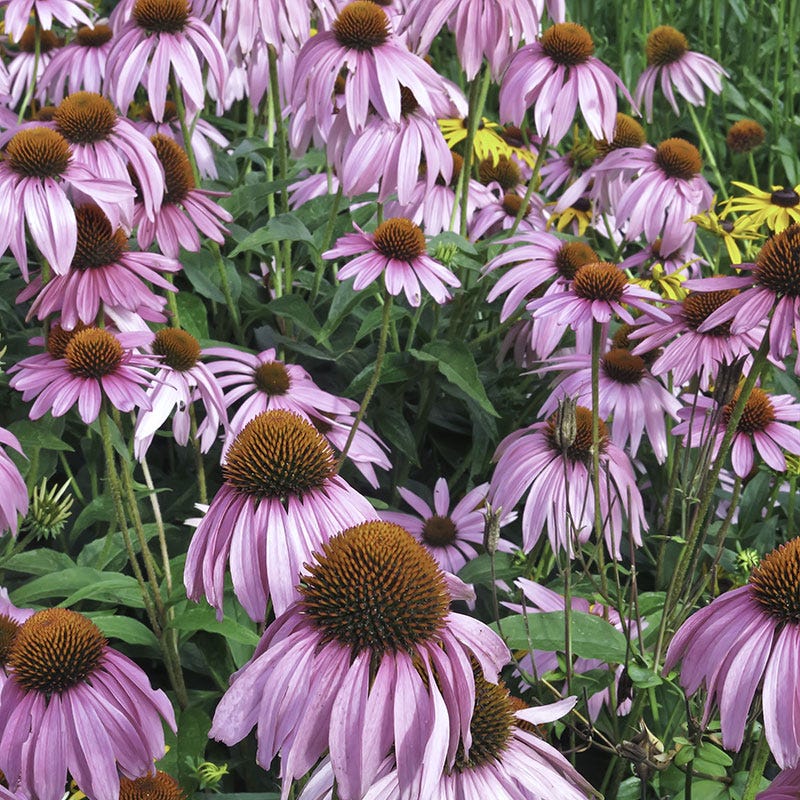
Pale Coneflower Seeds
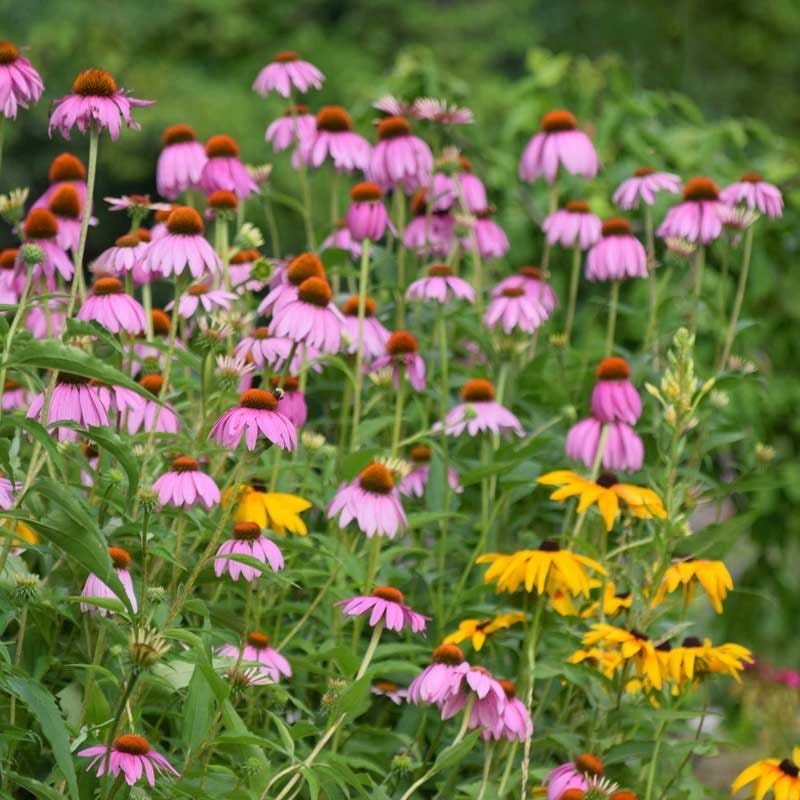
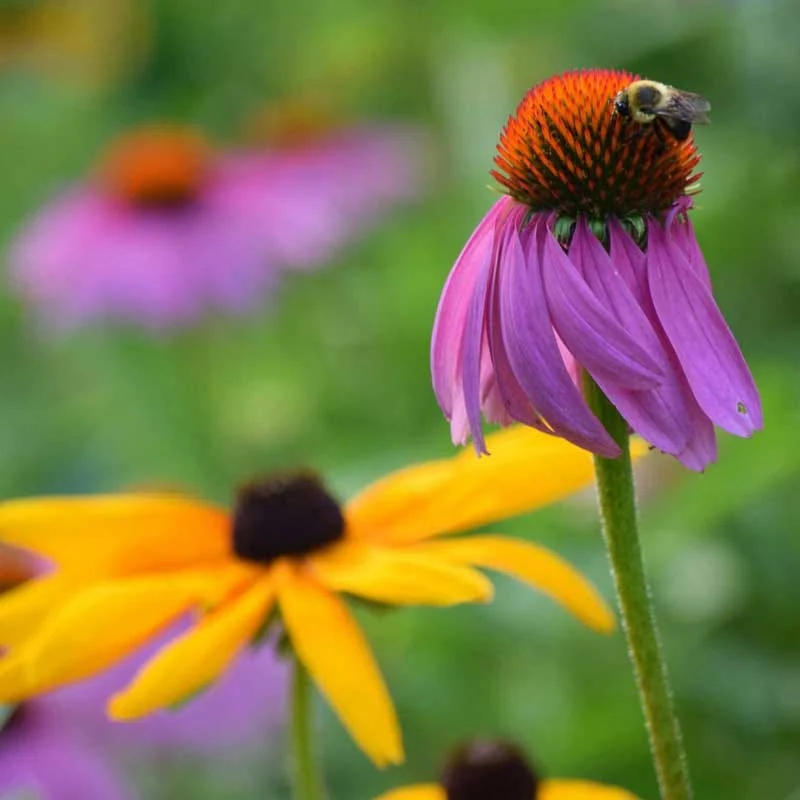
With a flower that looks a lot like a large black-eyed susan, the echinaceas have always been stars in plains plantings. They are tough, great for cutting, and some of our most beautiful native wildflowers. Once plants with their dark green, deeply-veined leaves are established, echinacea can be one of the most important colormakers in a mature meadow in midseason. But today, these flowers have even further importance. Under its botanical genus name, Echinacea, it has gained worldwide popularity as the No. 1 herbal medicinal. Long a favorite of Native Americans in treating snakebite, echinacea today is used in tablet and other forms to ward off colds and flus, and even to support the immune system. Millions of Americans now take pills or potions containing echinacea daily. (Medicine is made from all parts of the plant, but most important are the thick black rootstocks, which are ground up for processing.) The "Pale Coneflower" is the top species used in medicines, but the more common "Purple Coneflower" is used as well.
For the darker-hued "Purple Coneflower", see Echinacea purpurea.
With a flower that looks a lot like a large black-eyed susan, the echinaceas have always been stars in plains plantings. They are tough, great for cutting, and some of our most beautiful native wildflowers. Once plants with their dark green, deeply-veined leaves are established, echinacea can be one of the most important colormakers in a mature meadow in midseason. But today, these flowers have even further importance. Under its botanical genus name, Echinacea, it has gained worldwide popularity as the No. 1 herbal medicinal. Long a favorite of Native Americans in treating snakebite, echinacea today is used in tablet and other forms to ward off colds and flus, and even to support the immune system. Millions of Americans now take pills or potions containing echinacea daily. (Medicine is made from all parts of the plant, but most important are the thick black rootstocks, which are ground up for processing.) The "Pale Coneflower" is the top species used in medicines, but the more common "Purple Coneflower" is used as well.
For the darker-hued "Purple Coneflower", see Echinacea purpurea.
Original: $5.65
-70%$5.65
$1.70Description
With a flower that looks a lot like a large black-eyed susan, the echinaceas have always been stars in plains plantings. They are tough, great for cutting, and some of our most beautiful native wildflowers. Once plants with their dark green, deeply-veined leaves are established, echinacea can be one of the most important colormakers in a mature meadow in midseason. But today, these flowers have even further importance. Under its botanical genus name, Echinacea, it has gained worldwide popularity as the No. 1 herbal medicinal. Long a favorite of Native Americans in treating snakebite, echinacea today is used in tablet and other forms to ward off colds and flus, and even to support the immune system. Millions of Americans now take pills or potions containing echinacea daily. (Medicine is made from all parts of the plant, but most important are the thick black rootstocks, which are ground up for processing.) The "Pale Coneflower" is the top species used in medicines, but the more common "Purple Coneflower" is used as well.
For the darker-hued "Purple Coneflower", see Echinacea purpurea.