Grand Cascade Butterfly Bush
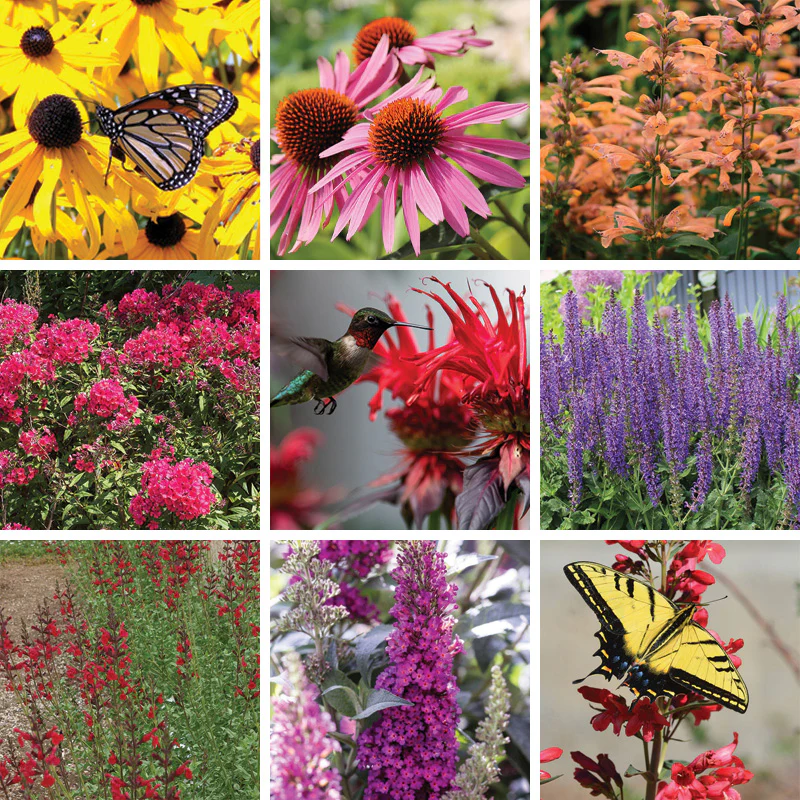
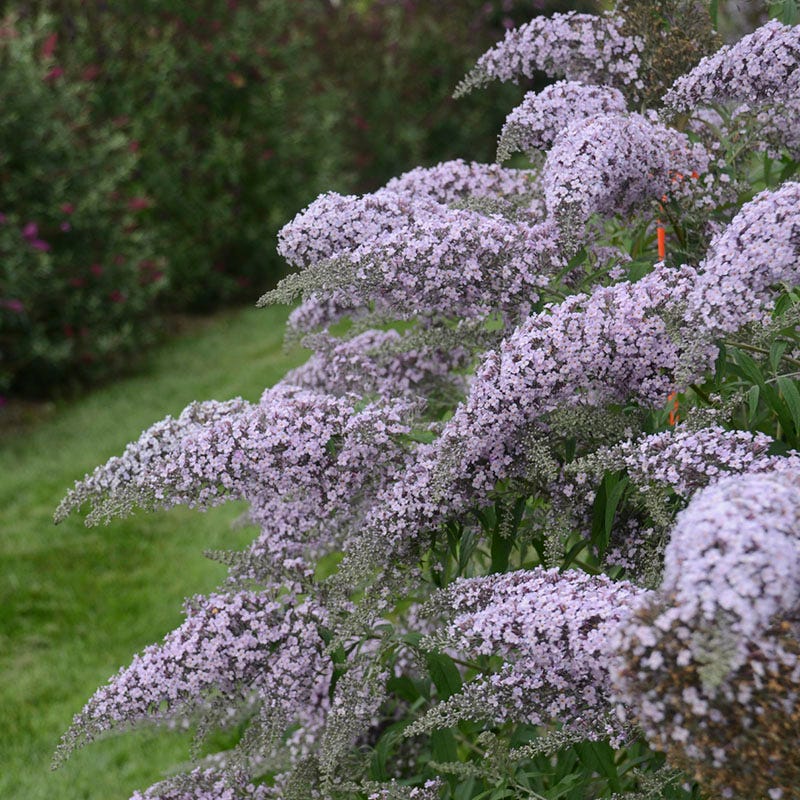
There are few shrubs so beloved to pollinators as Buddleia, or Butterfly Bush. Its tiny, funnel-shaped blooms are held in large, colorful panicles that are absolutely covered in butterflies and bees from mid-summer through to early fall. While not a North American native plant, the silver-green foliage stands out proudly against other late summer native staples like Magnus Echinacea or colorful Garden Phlox, and creates a wonderful environment for some of our most beloved pollinators. Butterfly Bushes are tolerant of partial shade, but grow and flower best in sunny sites with well-draining, average soils. They bloom on new wood, so cut the woody stems down within 12” of the soil line in early spring to make way for new growth.
There are few shrubs so beloved to pollinators as Buddleia, or Butterfly Bush. Its tiny, funnel-shaped blooms are held in large, colorful panicles that are absolutely covered in butterflies and bees from mid-summer through to early fall. While not a North American native plant, the silver-green foliage stands out proudly against other late summer native staples like Magnus Echinacea or colorful Garden Phlox, and creates a wonderful environment for some of our most beloved pollinators. Butterfly Bushes are tolerant of partial shade, but grow and flower best in sunny sites with well-draining, average soils. They bloom on new wood, so cut the woody stems down within 12” of the soil line in early spring to make way for new growth.
Description
There are few shrubs so beloved to pollinators as Buddleia, or Butterfly Bush. Its tiny, funnel-shaped blooms are held in large, colorful panicles that are absolutely covered in butterflies and bees from mid-summer through to early fall. While not a North American native plant, the silver-green foliage stands out proudly against other late summer native staples like Magnus Echinacea or colorful Garden Phlox, and creates a wonderful environment for some of our most beloved pollinators. Butterfly Bushes are tolerant of partial shade, but grow and flower best in sunny sites with well-draining, average soils. They bloom on new wood, so cut the woody stems down within 12” of the soil line in early spring to make way for new growth.