Gerald Darby Iris
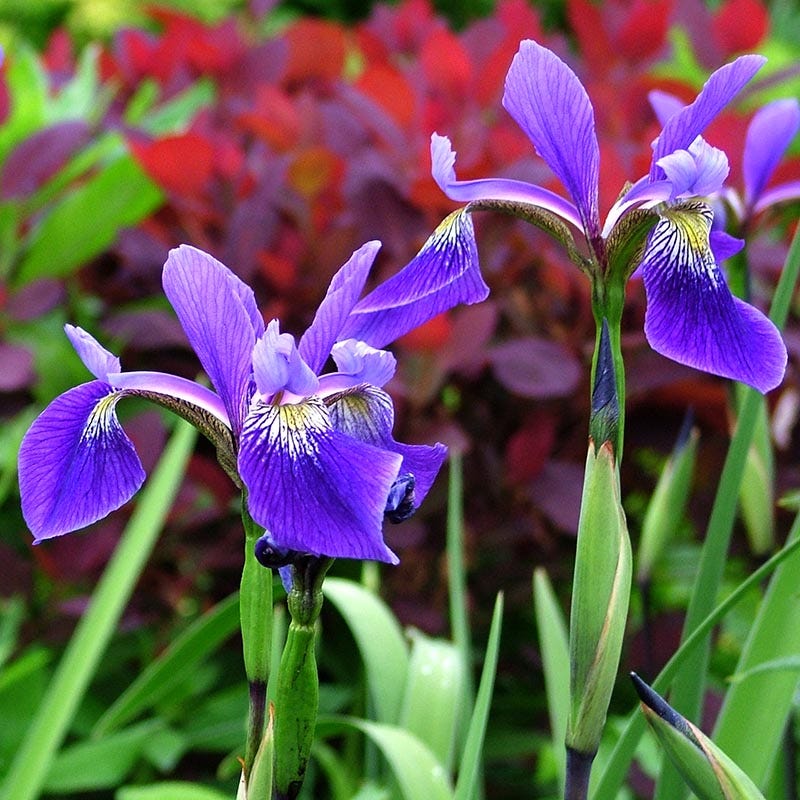
‘Gerald Darby’ Iris begins its spring performance with a flush of sword-shaped foliage and vibrant ultraviolet blooms. ‘Gerald Darby’ is a hybrid produced by crossing two marginal aquatic iris species native to eastern North America, Iris versicolor and Iris virginica. Plant in full sun to part shade, ideally with morning sun and afternoon shade. Plants need constantly moist soils and can be planted in up to 4 inches of standing water. Blooms open="open" early to mid-spring and make long-lasting cut flowers. Plants can be trimmed back during the dormant season. Irises spread slowly by rhizomes to form dense clumps, and can be divided in early autumn. Wear gloves when handling rhizomes. Plants are deer and rabbit resistant, and toxic if consumed.
‘Gerald Darby’ Iris begins its spring performance with a flush of sword-shaped foliage and vibrant ultraviolet blooms. ‘Gerald Darby’ is a hybrid produced by crossing two marginal aquatic iris species native to eastern North America, Iris versicolor and Iris virginica. Plant in full sun to part shade, ideally with morning sun and afternoon shade. Plants need constantly moist soils and can be planted in up to 4 inches of standing water. Blooms open="open" early to mid-spring and make long-lasting cut flowers. Plants can be trimmed back during the dormant season. Irises spread slowly by rhizomes to form dense clumps, and can be divided in early autumn. Wear gloves when handling rhizomes. Plants are deer and rabbit resistant, and toxic if consumed.
Original: $18.65
-70%$18.65
$5.59Description
‘Gerald Darby’ Iris begins its spring performance with a flush of sword-shaped foliage and vibrant ultraviolet blooms. ‘Gerald Darby’ is a hybrid produced by crossing two marginal aquatic iris species native to eastern North America, Iris versicolor and Iris virginica. Plant in full sun to part shade, ideally with morning sun and afternoon shade. Plants need constantly moist soils and can be planted in up to 4 inches of standing water. Blooms open="open" early to mid-spring and make long-lasting cut flowers. Plants can be trimmed back during the dormant season. Irises spread slowly by rhizomes to form dense clumps, and can be divided in early autumn. Wear gloves when handling rhizomes. Plants are deer and rabbit resistant, and toxic if consumed.