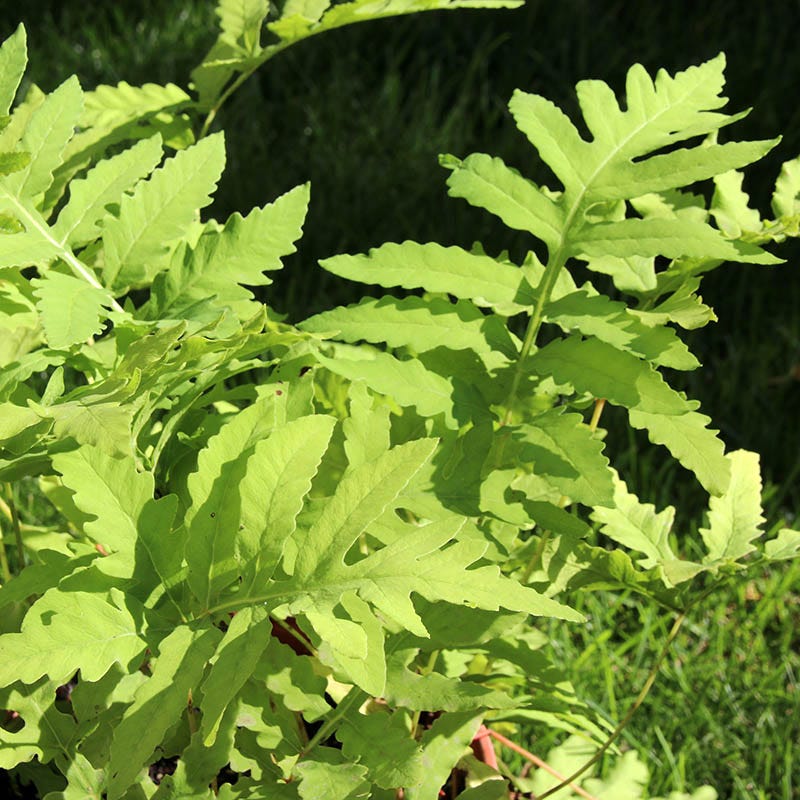
Sensitive Fern
Sensitive fern, Onoclea sensibilis, is found in moist woodlands, swamps and along the banks of streams throughout Eastern North America. Its native range extends from Newfoundland south to Florida, and all the way west to Colorado.
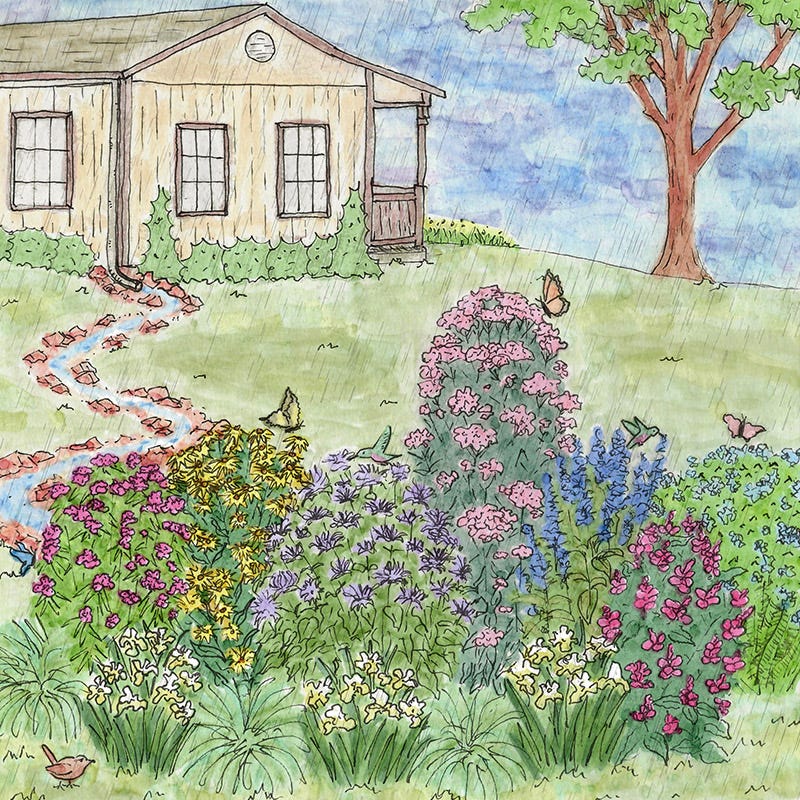
It performs best in average to moist, rich soils, and can tolerate occassional flooding. It is a great plant for rain gardens. In favorable locations, Sensistive Fern will naturalize and spread by rhizomes. If it becomes too aggressive, it is easy to thin. It can thrive in average garden soils, or in full sun, if there is consistent moisture and it does not dry out. Its common name refers to the tendency of the leaves to die-back and be sensitive to the first frost in fall.
Sensitive fern, Onoclea sensibilis, is found in moist woodlands, swamps and along the banks of streams throughout Eastern North America. Its native range extends from Newfoundland south to Florida, and all the way west to Colorado.
It performs best in average to moist, rich soils, and can tolerate occassional flooding. It is a great plant for rain gardens. In favorable locations, Sensistive Fern will naturalize and spread by rhizomes. If it becomes too aggressive, it is easy to thin. It can thrive in average garden soils, or in full sun, if there is consistent moisture and it does not dry out. Its common name refers to the tendency of the leaves to die-back and be sensitive to the first frost in fall.
Description
Sensitive fern, Onoclea sensibilis, is found in moist woodlands, swamps and along the banks of streams throughout Eastern North America. Its native range extends from Newfoundland south to Florida, and all the way west to Colorado.
It performs best in average to moist, rich soils, and can tolerate occassional flooding. It is a great plant for rain gardens. In favorable locations, Sensistive Fern will naturalize and spread by rhizomes. If it becomes too aggressive, it is easy to thin. It can thrive in average garden soils, or in full sun, if there is consistent moisture and it does not dry out. Its common name refers to the tendency of the leaves to die-back and be sensitive to the first frost in fall.