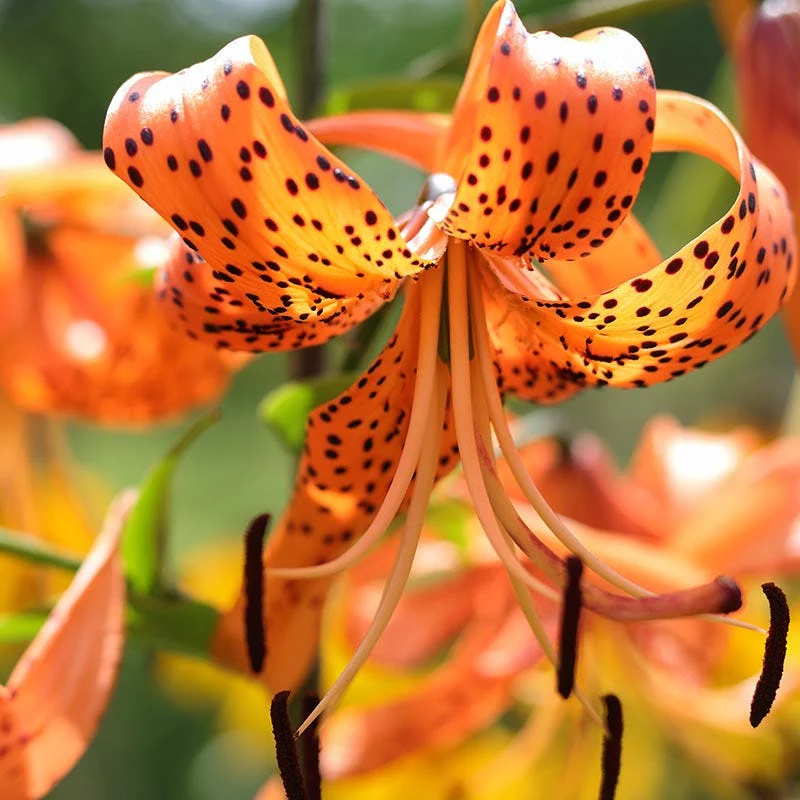
Orange Tiger Lily
Orange Tiger Lily provides late-season bloom in warm citrus shades just as the Lily season is beginning to come to a close. Plant Orange Tiger Lily bulbs deeply in a sunny location with average moisture. Consider staking to support flowers, if the stems are not supported by surrounding shrubs or perennials. Once you have a clump of Orange Tiger Lily in your garden, you will probably always notice a graceful stem popping up here and there; this species reproduces itself by making tiny bulblets (bulbils) along its stem. Bulblets fall off and slowly pull themselves deeper into the soil, blooming about two years later. Foliage can be toxic to cats and dogs if eaten, and is deer resistant.
Orange Tiger Lily provides late-season bloom in warm citrus shades just as the Lily season is beginning to come to a close. Plant Orange Tiger Lily bulbs deeply in a sunny location with average moisture. Consider staking to support flowers, if the stems are not supported by surrounding shrubs or perennials. Once you have a clump of Orange Tiger Lily in your garden, you will probably always notice a graceful stem popping up here and there; this species reproduces itself by making tiny bulblets (bulbils) along its stem. Bulblets fall off and slowly pull themselves deeper into the soil, blooming about two years later. Foliage can be toxic to cats and dogs if eaten, and is deer resistant.
Original: $12.65
-70%$12.65
$3.79Description
Orange Tiger Lily provides late-season bloom in warm citrus shades just as the Lily season is beginning to come to a close. Plant Orange Tiger Lily bulbs deeply in a sunny location with average moisture. Consider staking to support flowers, if the stems are not supported by surrounding shrubs or perennials. Once you have a clump of Orange Tiger Lily in your garden, you will probably always notice a graceful stem popping up here and there; this species reproduces itself by making tiny bulblets (bulbils) along its stem. Bulblets fall off and slowly pull themselves deeper into the soil, blooming about two years later. Foliage can be toxic to cats and dogs if eaten, and is deer resistant.